Research Projects
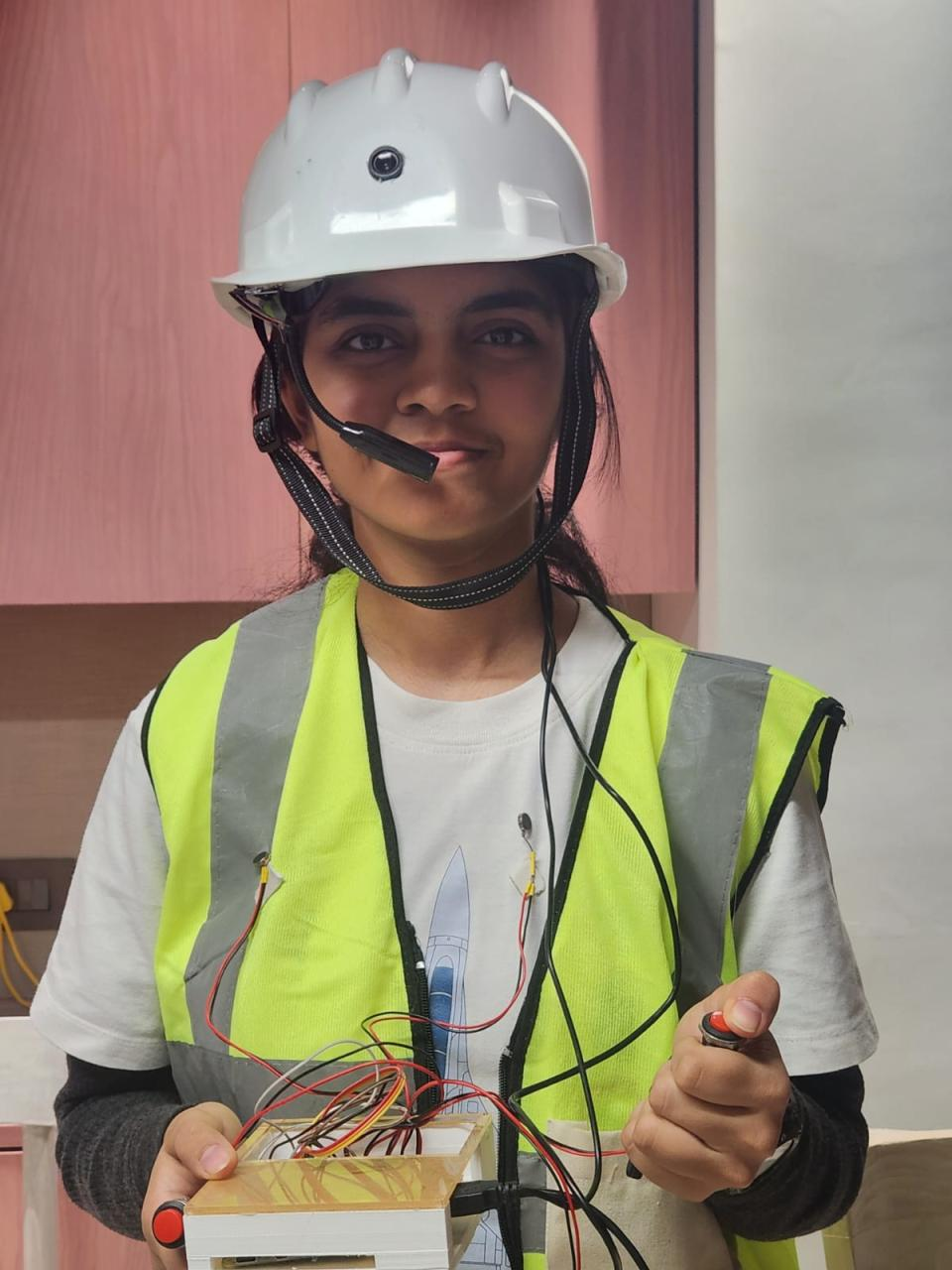
AI-Powered Assistive Wearable for the Visually Impaired
A low-cost, Raspberry Pi–based wearable that combines object detection, depth estimation, OCR, and multimodal feedback to support navigation and reading for visually impaired individuals in unstructured environments.
Features: (1) YOLO-based object detection with monocular depth for obstacle identification and distance estimation with audio/vibration alerts, and (2) OCR pipeline (PyTesseract + TTS) for reading text from signage.
- Published in American Journal of Computer Science and Technology
- Patent granted by Intellectual Property India
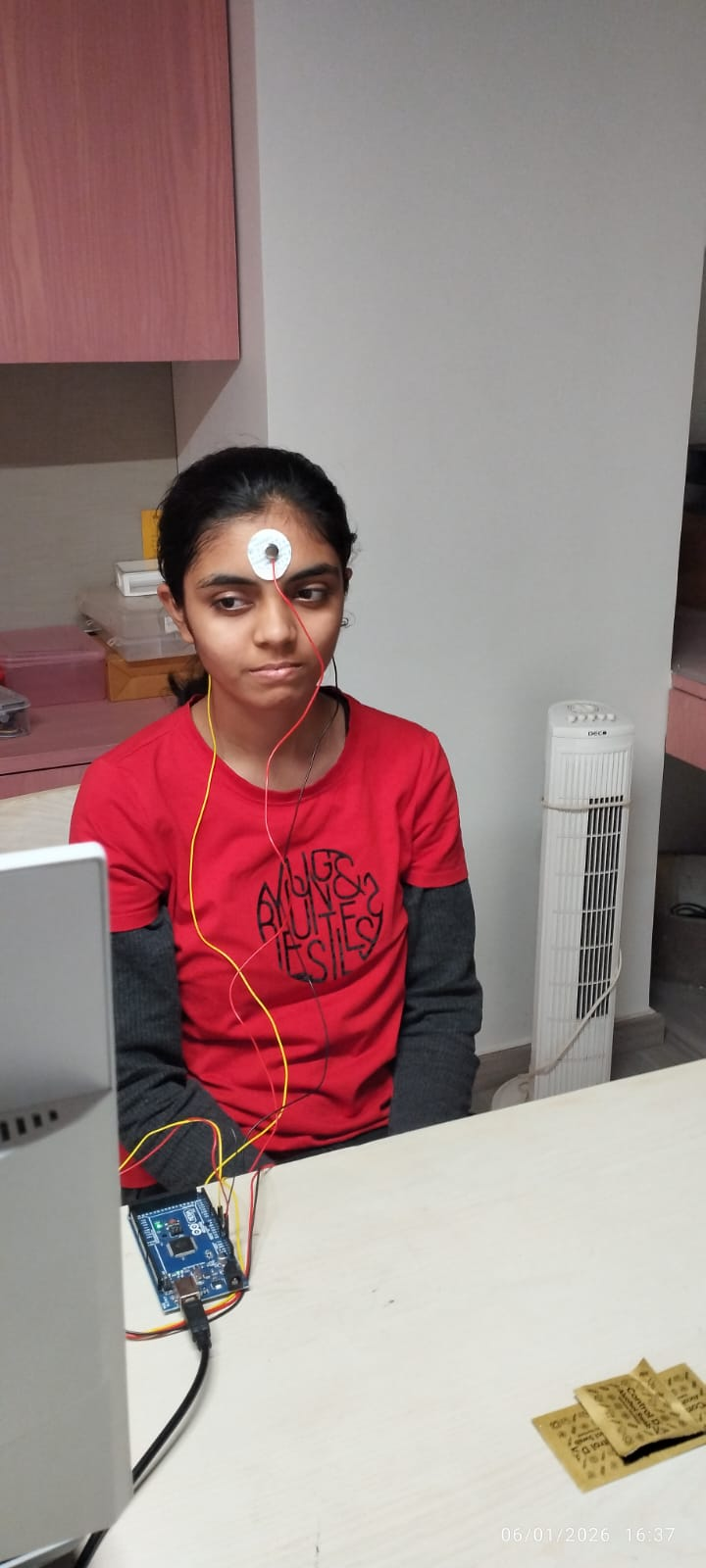
Low-Cost Wearable EEG System for Real-Time Cognitive State Classification
-> A sub-$35 wearable EEG system capturing raw cognitive signals at 80–100 Hz, cutting hardware costs by over 94% compared to standard commercial-grade devices.
-> Curated a dataset of 400 seconds from 10 participants, utilizing standard serial communication to log raw analog-to-digital signals directly without applying hardware offset corrections
-> Demonstrated practical feasibility by integrating the predictive models into an online car simulator, utilizing classified attention and relaxation states to control acceleration and braking dynamically.
- Published in Journal of Engineering Research (Q1, Elsevier)
BIPV & Floating Solar Solution for Scalable Energy Infrastructure
Selected as a Student Researcher for the New York Academy of Sciences — Junior Academy, a highly competitive global program with roughly a 10% acceptance rate.
Collaborated with a team of 6 high schoolers from across the world and developed a BIPV and floating solar based solution for the probelm statement " To design an innovative and scalable solution to improve electrical infrastructure and/or energy storage technology in order to make solar energy use more reliable, efficient, and economical for meeting the energy demands of technology and society."
- Student Researcher, New York Academy of Sciences — Junior Academy (~10% acceptance rate)
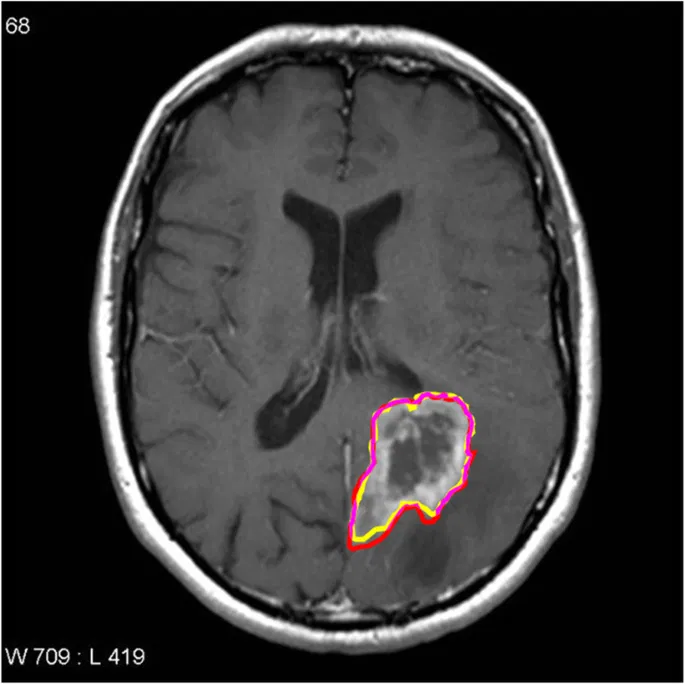
Image Segmentation for identifying Brain Tumors in patients' MRI scans
Developed an anatomically guided 2D U-Net with prior-informed attention for brain tumor segmentation (glioma, meningioma, pituitary) using the BRISC MRI dataset in PyTorch, achieving a Dice score of 0.709 and HD95 of 36.5 px. Engineered a complete training and evaluation pipeline incorporating class-imbalance-aware loss functions, 3-fold cross-validation, geometric data augmentation, and multiple segmentation metrics.
Benchmarked the model against baseline U-Net, attention-gate ablation, Swin-UNet, and UNETR architectures, using paired Wilcoxon tests to assess significance. Conducted false-positive analysis to evaluate anatomically implausible detections and compared model performance under identical training conditions.
Social Impact
I co-founded Hyperbloom Hacks, a student-led nonprofit creating more accessible pathways into computer science.
Through hackathons, mentorship, and partnerships, we are giving 2000+ students the resources and opportunities to learn, build, and share their work.
- Raised ~$120,000 in sponsorship prizes for winners and participants
I authored Triangle Squad – Adventures in Trigonometry, an illustrated mathematics book designed to introduce students in Grades 5–8 to trigonometric thinking through storytelling and real-world applications, allowing them to develop an intuitive understanding of concepts before formally encountering them in high school.
Before writing the book, I interacted with students from multiple schools to identify common misconceptions and understand how they approached mathematical problems. I incorporated evidence-based educational design principles, including scaffolded learning, inquiry-based learning, and contextual problem-solving, to build conceptual understanding before introducing symbolic notation and formula-based methods.
Read book ↗Awards
CREST Gold Award
Awarded for the Jacket–Helmet Assistive System for Visually Impaired Individuals project.
International Mathematical Modelling Challenge — Honourable Mention
AP Scholar with Distinction
Beyond Academics
Sports & Athletics
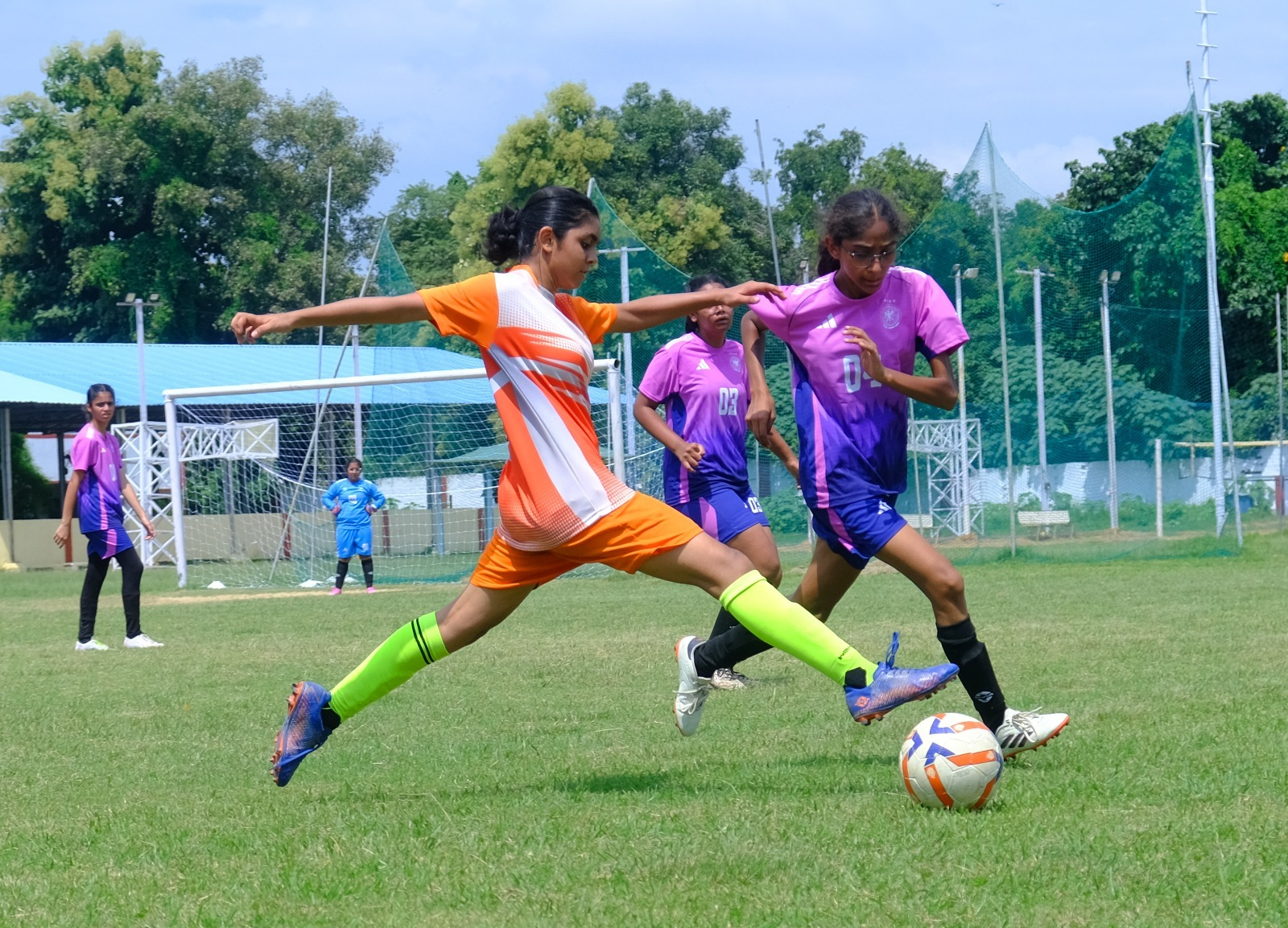
- 3x National Soccer Player — selected 3 consecutive years to represent Gujarat-Rajasthan (NorthWest Region) at the CISCE National Games, ranked 2nd nationwide (2024)
- AFI Certified Athlete (Athletics Federation of India) for Track & Field and Javelin Throw — one of the highest recognitions in India
Music
Multi-Instrumentalist
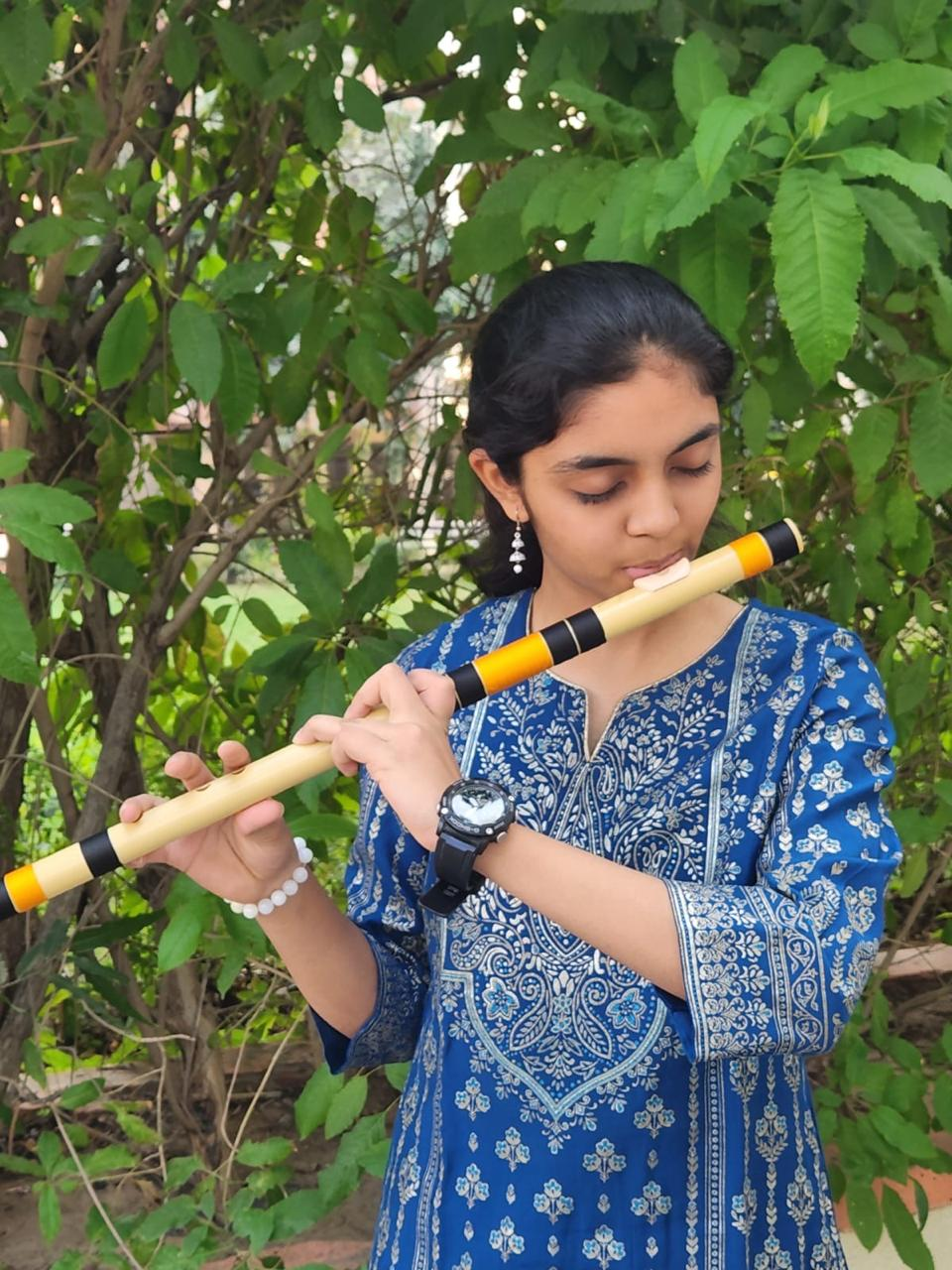
- Flute (Bansuri)
- Harmonium
- Ukulele